Have you ever wondered how server racks are organized? The "U" height plays a critical role in this system. Rack units (U) standardize the height of equipment in server racks, ensuring compatibility and efficient use of space. In this post, we'll explore what "U" height is, why it matters, and how it helps in planning scalable IT infrastructure.
What is "U" Height?
Defining "U" Height
"U" stands for "rack unit," a standardized measurement used to define the height of equipment in server racks.
Each "U" is equal to 1.75 inches (44.45mm), which ensures consistency across different types of rack-mounted devices.
Why Is "U" Height Important?
By standardizing the height of equipment, "U" height allows various devices like servers, routers, and switches to fit seamlessly into racks.
This consistency ensures that hardware from different manufacturers can be mounted without issues, making it easier for businesses to upgrade or mix brands without compatibility problems.
Common Rack Unit Sizes and Their Applications
What is 1U Height?
1U refers to a rack unit that measures 1.75 inches (44.45mm) in height.
This compact size is typically used for devices that don’t require a lot of space but still need to be mounted in a server rack. Examples of equipment that typically use 1U space include network switches, compact servers, and some networking equipment. This size is perfect for environments where space is limited but high functionality is needed.
What is 2U Height?
2U represents 3.5 inches of vertical space in a rack.
This size is ideal for slightly larger equipment, like mid-range servers, uninterruptible power supplies (UPS), and storage systems. Devices requiring more space for higher processing power, additional storage, or advanced cooling often come in 2U form. The 2U configuration strikes a balance between space efficiency and performance capabilities.
What is 3U and 4U Height?
3U is 5.25 inches, and 4U is 7 inches in height.
These sizes are typically used for high-performance systems, larger storage servers, or systems with specialized components. A 3U rack provides ample space for more powerful servers and better airflow, while a 4U rack is perfect for larger, advanced systems that need to accommodate more hardware or improved cooling solutions. Common devices in 3U or 4U spaces include data-intensive servers, enterprise storage arrays, and specialized computing equipment.
Are There Rack Sizes Larger Than 4U?
Yes, there are racks larger than 4U, such as 6U, 9U, and 12U.
These larger configurations are essential for advanced setups like blade server chassis, high-capacity storage systems, or equipment that needs extra space for extensive cabling, cooling, or multiple CPUs. For example, a 6U or 9U rack might be used for servers that require multiple GPU cards, while a 12U rack may be necessary for very high-performance computing environments or large data storage solutions.
How to Calculate and Choose the Right "U" Height
Determining the Number of Rack Units Needed
To determine how many U spaces your equipment will occupy, begin by measuring the height of each device in inches.
For example, a server that is 3.5 inches tall will require 2U of rack space (since 1U equals 1.75 inches). If your device is not a perfect multiple of 1.75 inches, round up to the nearest whole number. For instance, if your storage device measures 4.2 inches, it will need 3U, as each U represents 1.75 inches.
Here's a simple breakdown:
● 1U = 1.75 inches
● 2U = 3.5 inches
● 3U = 5.25 inches
● 4U = 7 inches
Once you've measured your devices, sum up the required U spaces for all items to determine the total rack height needed. For example, if you have a 2U server, a 1U switch, and a 3U storage unit, the total rack height required would be 6U.
Planning for Future Expansion
While calculating the current space requirement is important, planning for future growth is equally essential. Leaving extra room in your rack provides flexibility for upgrades or new devices.
For example, if your current setup needs 12U, opting for a 24U rack gives you room for new servers, additional storage devices, or networking equipment down the line. This foresight avoids the hassle of purchasing a new rack or having to reconfigure your existing setup when it's time to add more hardware.
Additionally, it's good practice to allocate 20-30% of your rack space for future expansion. This ensures that you don't run out of space too soon and can easily integrate new equipment as your business or IT infrastructure grows.
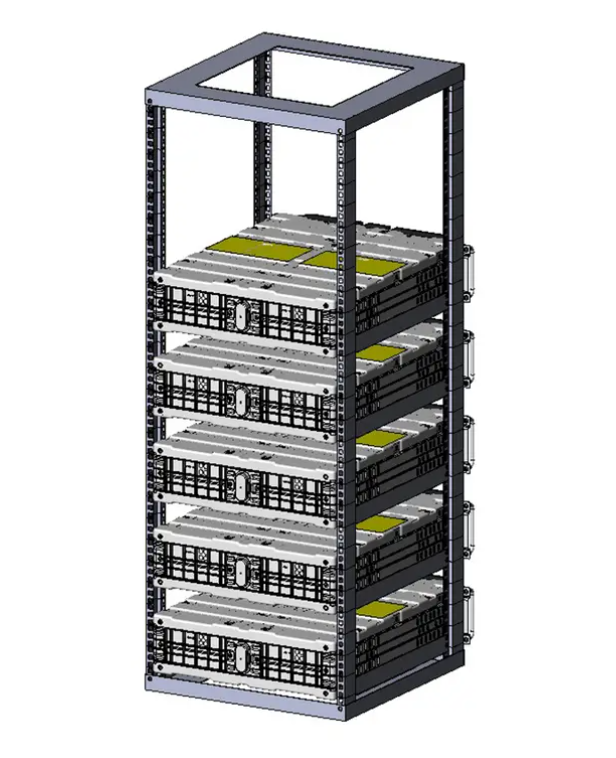
The Role of "U" Height in Server Rack Organization
Organizing Equipment Based on "U" Height
Properly organizing your server rack by "U" height ensures maximum efficiency and easy access.
To optimize space, start by placing larger equipment at the bottom, such as 4U or 6U devices. This helps distribute the weight evenly and provides a stable base. Smaller equipment, like 1U servers or switches, can go higher in the rack.
When balancing smaller and larger units, consider leaving a bit of extra space between devices. This not only makes it easier to manage cables but also ensures that your rack remains organized. Group similar types of equipment together to streamline maintenance and upgrades.
Airflow and Cooling Considerations for "U" Height
Airflow and cooling are crucial when organizing equipment by U height.
Leaving space between devices helps air circulate properly, preventing overheating. It's essential to plan U height not only based on equipment size but also keeping airflow in mind. For instance, if you're placing high-performance servers or storage systems, be sure to leave room for ventilation.
When configuring your rack, aim for gaps between units to allow cooler air to flow freely around the equipment. Using blanking panels for unused U spaces can also help control airflow and direct it where it's needed most. Properly planning U height in relation to cooling ensures your devices operate efficiently and prolongs their lifespan.
Mixing Different "U" Heights in a Single Rack
Can You Mix Different "U" Heights in One Rack?
Yes, mixing different U heights in the same rack is not only possible but also a common practice in server rack organization.
By combining devices of varying U sizes, you can fully utilize available rack space. The key to this setup is strategic planning. For example, placing larger 4U equipment at the bottom provides a stable base, while smaller units such as 1U or 2U can be stacked higher in the rack. This method maximizes space, ensures proper weight distribution, and keeps everything stable.
Combining 1U, 2U, and 4U Equipment in the Same Rack
When arranging equipment of different U heights, it’s essential to prioritize stability and space efficiency.
● Start by positioning the heaviest equipment, like 4U servers, at the bottom of the rack. This helps keep the rack stable and prevents top-heavy imbalance.
● Place 2U devices next, as they typically require more space but are not as heavy.
● Finally, place smaller 1U devices at the top. These compact units are ideal for the upper part of the rack, as they don't add much weight.
You can also use gaps between devices for extra accessories like cable management systems or cooling units, making the most of every inch of space.
Tips for Efficient Multi-U Setup
When mixing U heights, there are a few best practices to follow to maintain efficiency, accessibility, and proper airflow.
● Ensure Proper Airflow: Leave sufficient space between equipment to allow air to circulate. Overcrowding can lead to overheating.
● Use Cable Management: For a clean, organized setup, use cable management arms or trays to prevent cables from blocking airflow and creating clutter.
● Add Blanking Panels: When some U spaces are not used, blanking panels help direct airflow in the right direction and improve cooling efficiency.
● Make Devices Accessible: Install devices that need regular maintenance or monitoring, like 1U switches, at the top of the rack for easy access.
● Balance the Load: Avoid putting all heavy devices at the top. Distribute the weight evenly to prevent instability and ensure proper rack operation.
By following these guidelines, you can effectively organize a multi-U rack, ensuring that your equipment stays cool, accessible, and well-arranged.
Conclusion
Understanding "U" height is crucial for optimizing IT infrastructure. When selecting rack unit sizes, always consider both current needs and future growth. Plan ahead by leaving extra space for expansion. Be sure to carefully evaluate U height when setting up or upgrading your server rack to ensure long-term efficiency and scalability.
WebiT has years of experience in in designing and manufacturing customized Server Racks. If you want to know more about Server Racks, feel free to contact us anytime with your inguiries.
FAQ
Q: What Does 1U Mean in Server Racks?
A: 1U refers to a standard measurement for rack-mounted equipment, equal to 1.75 inches (44.45mm) in height. It is commonly used for compact devices like network switches and small servers.
Q: Can I Use Different Rack Sizes in the Same Server Rack?
A: Yes, different U sizes can be used in the same rack. Proper planning ensures space optimization, stability, and easy access to equipment.
Q: How Do I Calculate How Many U Spaces I Need?
A: To calculate U spaces, measure your equipment's height and divide by 1.75 inches. Round up to the next whole U if necessary.
Q: Why Is U Height Important for Scalability?
A: U height is crucial for scalability as it allows for efficient space usage and future expansion without needing a new rack.


